One of the first things new tarot readers want to understand is how the 78 cards are organized — and why that organization matters.
The short answer is that the deck is divided into two distinct sections: the Major Arcana and the Minor Arcana. Understanding the difference between them is one of the most foundational skills in tarot, because these two sections carry different kinds of weight in a reading.
The Major Arcana: The Big Picture
The Major Arcana consists of 22 cards numbered 0 through 21. They begin with The Fool — card zero, representing pure potential and new beginnings — and end with The World, representing completion and the fulfillment of a full cycle.
Together, the 22 Major Arcana cards tell the story of The Fool’s Journey — a narrative arc that maps the development of a soul moving through life’s most significant experiences. Each Major Arcana card represents a universal archetypal force or life lesson that every human being encounters at some point.
When Major Arcana cards appear in a reading, they signal that something significant is operating — a soul-level lesson, an important turning point, or an archetypal force that is shaping the situation at a deeper level than ordinary circumstances.
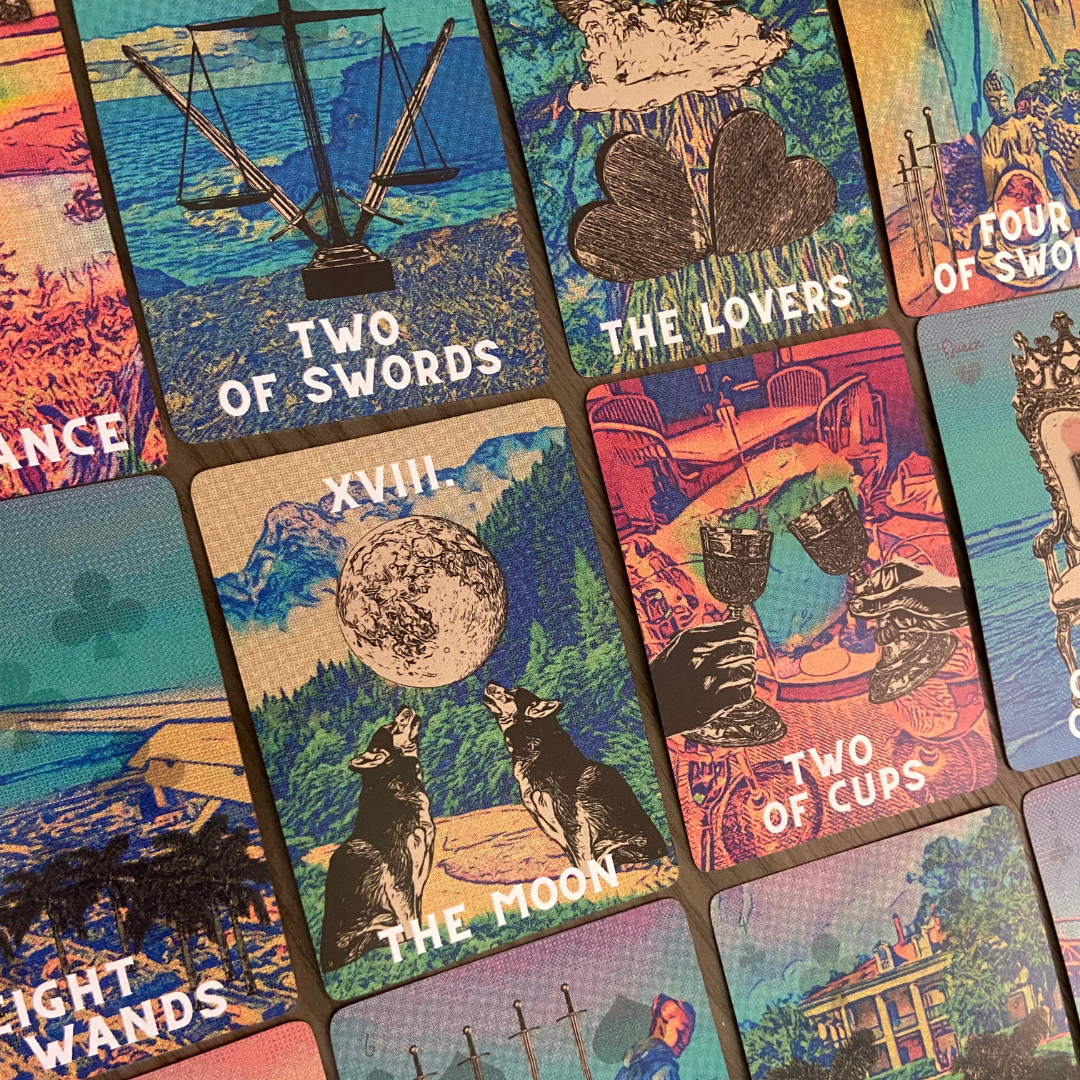
The 22 Major Arcana cards are: 0 The Fool, I The Magician, II The High Priestess, III The Empress, IV The Emperor, V The Hierophant, VI The Lovers, VII The Chariot, VIII Strength, IX The Hermit, X Wheel of Fortune, XI Justice, XII The Hanged Man, XIII Death, XIV Temperance, XV The Devil, XVI The Tower, XVII The Star, XVIII The Moon, XIX The Sun, XX Judgement, XXI The World.
The Minor Arcana: The Everyday Experience
The Minor Arcana consists of 56 cards organized into four suits of 14 cards each. Each suit contains ten numbered cards (Ace through Ten) and four court cards (Page, Knight, Queen, King).
Where the Major Arcana addresses the big, significant forces of life, the Minor Arcana describes the texture of daily experience — the emotions, thoughts, actions, and practical realities that make up most of our waking hours.
The Four Suits and Their Meanings
Wands — associated with the element of Fire — govern passion, creativity, ambition, and the drive to pursue what excites you. When Wands appear, energy and action are primary.
Cups — associated with the element of Water — govern emotion, relationships, intuition, and the inner life. When Cups appear, feeling and connection are at the center.
Swords — associated with the element of Air — govern thought, communication, conflict, and truth. When Swords appear, the mind and honest assessment are most relevant.
Pentacles — associated with the element of Earth — govern money, work, health, and the practical material world. When Pentacles appear, tangible, physical realities need attention.
The Court Cards
Each suit contains four court cards representing different stages of development within that suit’s energy. Pages are beginners — curious, eager, open. Knights are active pursuers — passionate and sometimes impulsive. Queens embody the suit’s qualities with mature, internalized wisdom. Kings apply the suit’s qualities outwardly with authority and experience.
Court cards are among the most nuanced in the deck because they can represent actual people in your life, aspects of your own personality, or energies that a situation is calling for.
How Many Major vs Minor Cards Appear in a Reading?
A standard tarot deck contains 22 Major Arcana (approximately 28% of the deck) and 56 Minor Arcana (approximately 72%). In any given spread, the proportion of Majors to Minors is itself significant information. A reading dominated by Major Arcana suggests a period of significant archetypal weight. A reading with no Majors suggests a practical, manageable situation within your direct control.
Understanding the structure of the 78 cards transforms tarot from 78 separate things to memorize into a coherent, internally consistent language — one that becomes more fluent the more you work with it.
Kendall Evans is the author of Tarot Basics and Beyond, a comprehensive guide to reading tarot from your first shuffle to advanced techniques. Available on Amazon Kindle.