If you have ever been curious about tarot but weren’t sure where to start, you are in the right place.
Tarot is not fortune-telling. It is not a mystical system reserved for psychics, and it does not predict a fixed, unavoidable future. At its core, tarot is a symbolic language — one that uses 78 illustrated cards to reflect your current energy, your patterns, your possibilities, and the deeper dimensions of whatever situation you are navigating.
Think of it less like a crystal ball and more like a mirror. A mirror doesn’t create your reflection. It simply shows you what is already there.
What is a tarot deck?
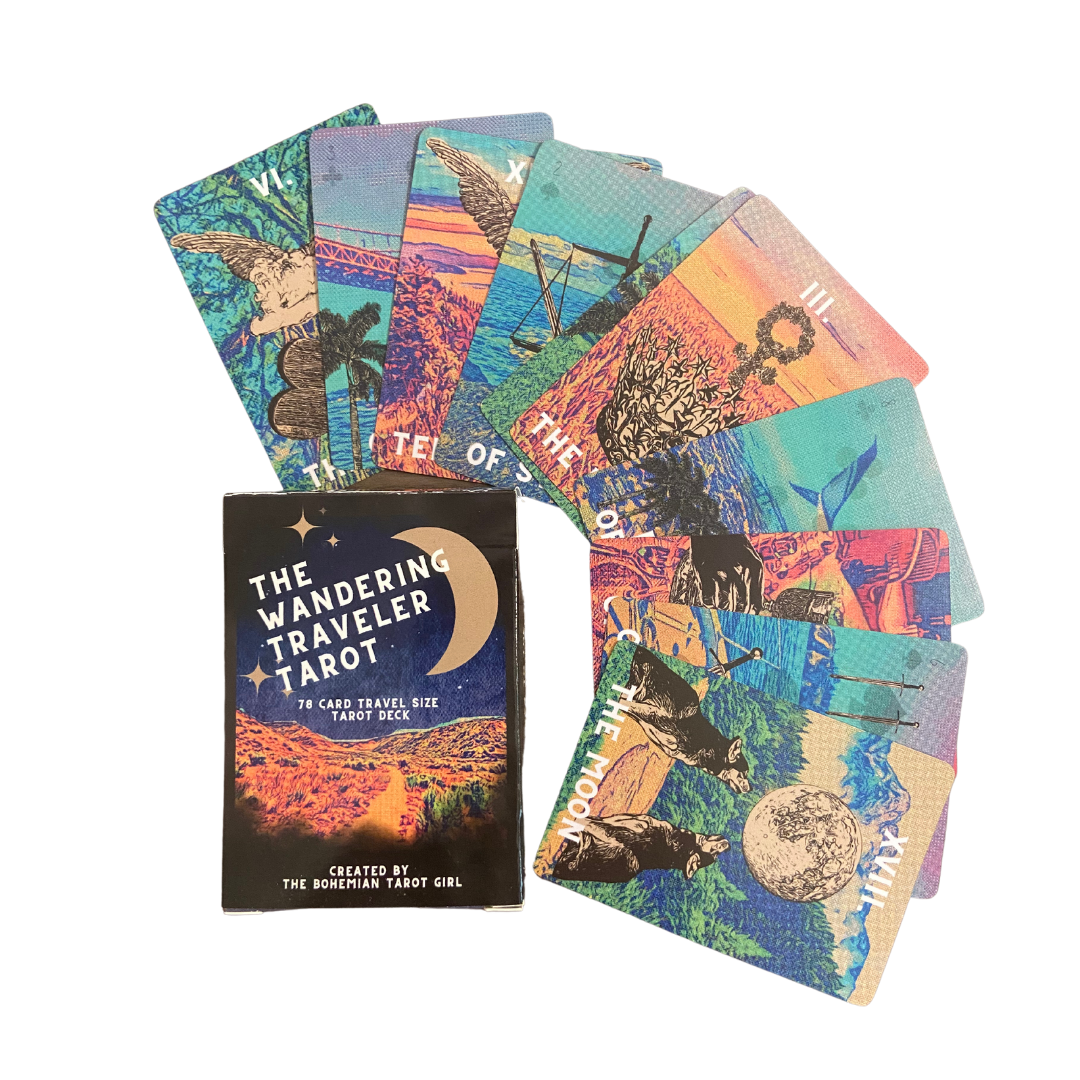
A standard tarot deck contains 78 cards divided into two sections. The Major Arcana consists of 22 cards representing the big archetypal forces and life lessons — cards like The Fool, The High Priestess, The Tower, and The World. The Minor Arcana consists of 56 cards organized into four suits — Wands, Cups, Swords, and Pentacles — that describe the texture of everyday experience.
Each suit corresponds to one of the four classical elements. Wands represent Fire and creativity. Cups represent Water and emotion. Swords represent Air and the mind. Pentacles represent Earth and the material world.
How does tarot actually work?
There are several honest answers to this question, and all of them are valid depending on your worldview.
From a spiritual perspective, many readers believe the card that lands in your hands is not random — that something larger is guiding the draw toward what you most need to see.
From a psychological perspective, the images on tarot cards engage your subconscious mind, surfacing thoughts and feelings that have been living just beneath awareness. Looking at a card and asking what it means to you right now is a surprisingly effective form of honest self-inquiry.
From an intuitive perspective, the magic lies in the interaction between the symbols, your own inner knowing, and your willingness to be honest with yourself.
You do not need to commit to one of these explanations before you begin reading. Most experienced readers hold all three perspectives at once.
What do you need to start reading tarot?
Less than you think. You need a deck that resonates with you, a basic understanding of the card structure, and the willingness to pay attention. You do not need psychic abilities, years of training, or an expensive deck. Curiosity and consistent practice are the most valuable tools a beginning reader can have.
Is tarot connected to any religion?
Tarot is not inherently connected to any religious tradition. It has been used across centuries by people of many different faiths and no faith at all. The cards themselves are a symbolic system, not a spiritual prescription. What you bring to the practice — your own beliefs, framework, and intention — shapes what the practice becomes for you.
Can anyone learn to read tarot?
Yes. Genuinely. The belief that you must be born with a special gift to read tarot is one of the most persistent myths in the tarot world — and one of the most limiting. Tarot is a learnable skill. The symbolic language of the cards can be studied, practiced, and developed by anyone willing to show up consistently.
The cards do not hold your power. They help you remember that you already have it.Kendall Evans is the author of Tarot Basics and Beyond: A Modern Guide to Reading Tarot, Building Confidence, and Trusting Your Intuition, available now on Amazon Kindle. Visit KendallEvans.com to learn more.